8 Strategies to Make Offices and Buildings More Energy Efficient

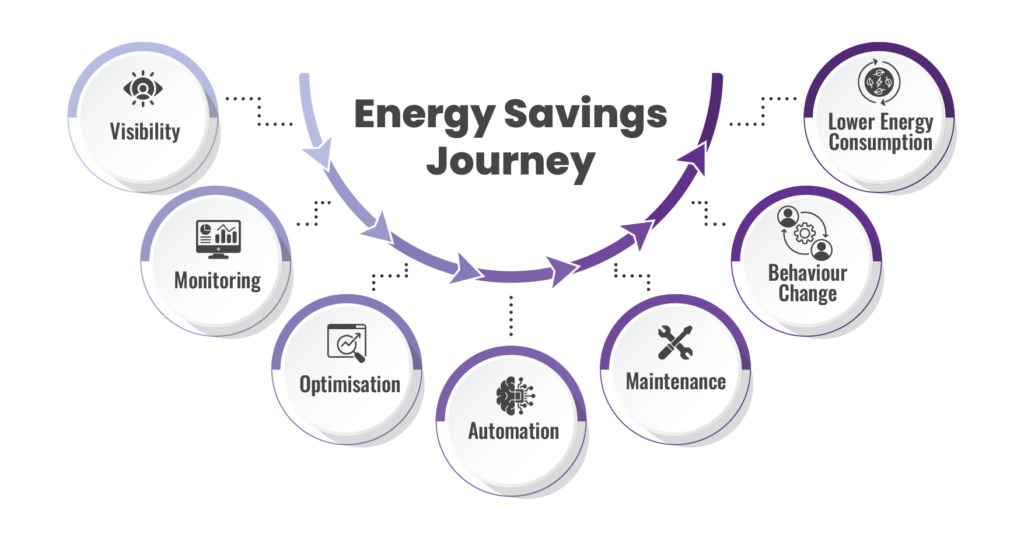
Energy efficiency isn’t a building problem. It’s an operations problem.
Even efficient workplaces can waste energy through poor scheduling, unnecessary lighting, inefficient cooling and under-maintained systems. That’s why improving energy performance requires continuous monitoring and operational optimisation.
Why Facility Management Matters
Every building system, from lighting and HVAC to equipment and utilities, depends on how it’s managed. Poorly controlled operations can lead to significant energy waste, while proactive facility management helps align energy use with actual demand.
With buildings accounting for nearly 30–35% of India’s total electricity consumption, operational efficiency has become a critical priority.
1. Start with Energy Visibility
You can’t improve what you can’t measure.
Tracking system-level data across HVAC, lighting and equipment helps facility teams identify inefficiencies, spot usage patterns and take corrective action before costs escalate. Continuous monitoring can reduce energy consumption by 10–20%.
2. Optimise Lighting Based on Usage
Lighting is one of the easiest areas to improve.
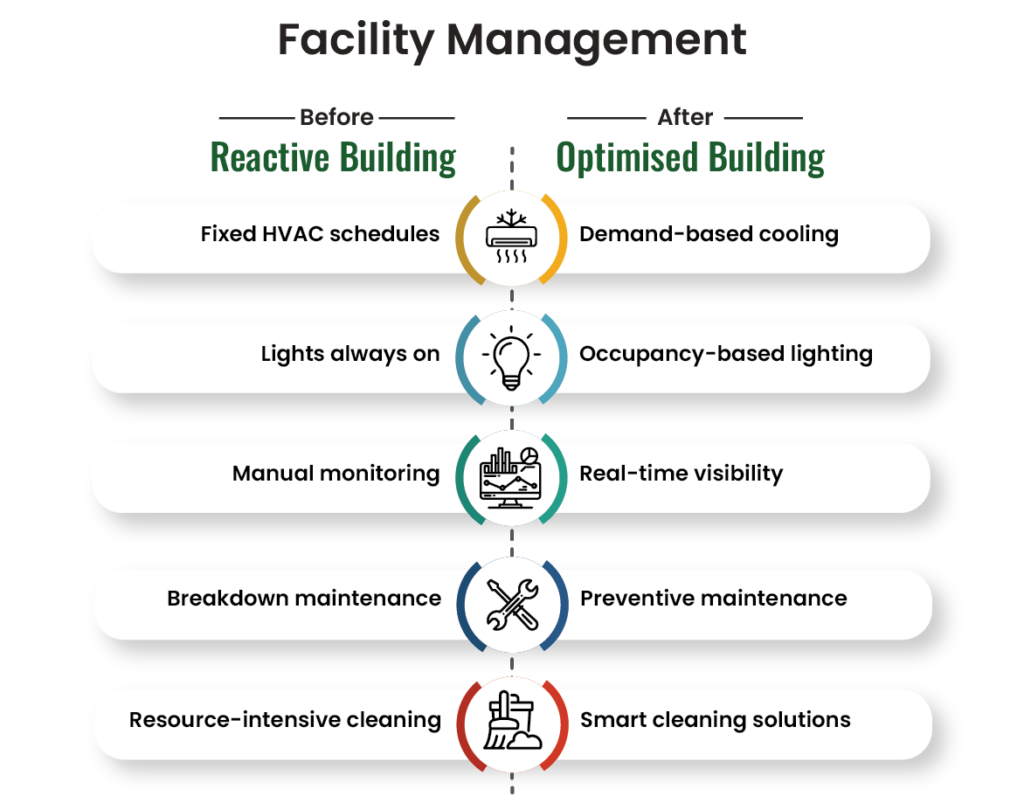
Replacing conventional fixtures with LEDs, installing motion sensors and aligning lighting schedules with occupancy can significantly reduce unnecessary consumption. According to BEE, efficient lighting measures can contribute to substantial energy savings in commercial buildings.
3. Manage HVAC Dynamically
HVAC systems are among the largest energy consumers in commercial buildings.
Instead of operating on fixed schedules, cooling systems should respond to occupancy levels, space utilisation and outdoor conditions. Regular maintenance, zoning and temperature optimisation can improve efficiency without compromising comfort.
4. Implement Building Management Systems (BMS)
Many buildings still manage systems independently, creating inefficiencies.
An integrated BMS enables real-time monitoring, automation and coordinated control of lighting, HVAC and utilities. This helps reduce waste, improve responsiveness and optimise overall building performance.
5. Improve Commercial Kitchen Efficiency
Commercial kitchens consume significantly more energy than most workplace areas due to intensive cooking, refrigeration and ventilation requirements.
Practices such as batch cooking, preventive maintenance and energy-efficient equipment help reduce consumption while maintaining service quality.
6. Strengthen Preventive Maintenance
Poorly maintained equipment consumes more energy and performs less efficiently.
Routine inspections, filter cleaning, calibration and timely servicing help systems operate at optimal performance, reduce energy load and improve reliability.
7. Adopt Smart Cleaning and Robotics
Technology-driven cleaning solutions help improve operational efficiency through better route planning, resource management and consistent performance.
Smart cleaning systems and robotics can reduce unnecessary energy and water consumption while supporting higher service standards.
8. Encourage Occupant Awareness
Technology alone cannot eliminate energy waste.
Simple behaviours such as switching off lights, avoiding unnecessary cooling and using equipment responsibly can collectively make a meaningful difference. Clear communication and workplace awareness programmes help reinforce energy-conscious habits.
Energy efficiency is built through everyday operational decisions, not one-time upgrades.
From lighting and HVAC to kitchens, maintenance and cleaning, facility management plays a central role in reducing waste and improving building performance. As workplaces continue to evolve, organisations that combine technology, data and operational discipline will be better positioned to achieve long-term energy efficiency goals.
The most energy-efficient buildings aren’t just designed well. They’re managed well.