Why Institutional Catering Makes Sense for Large Organisations?
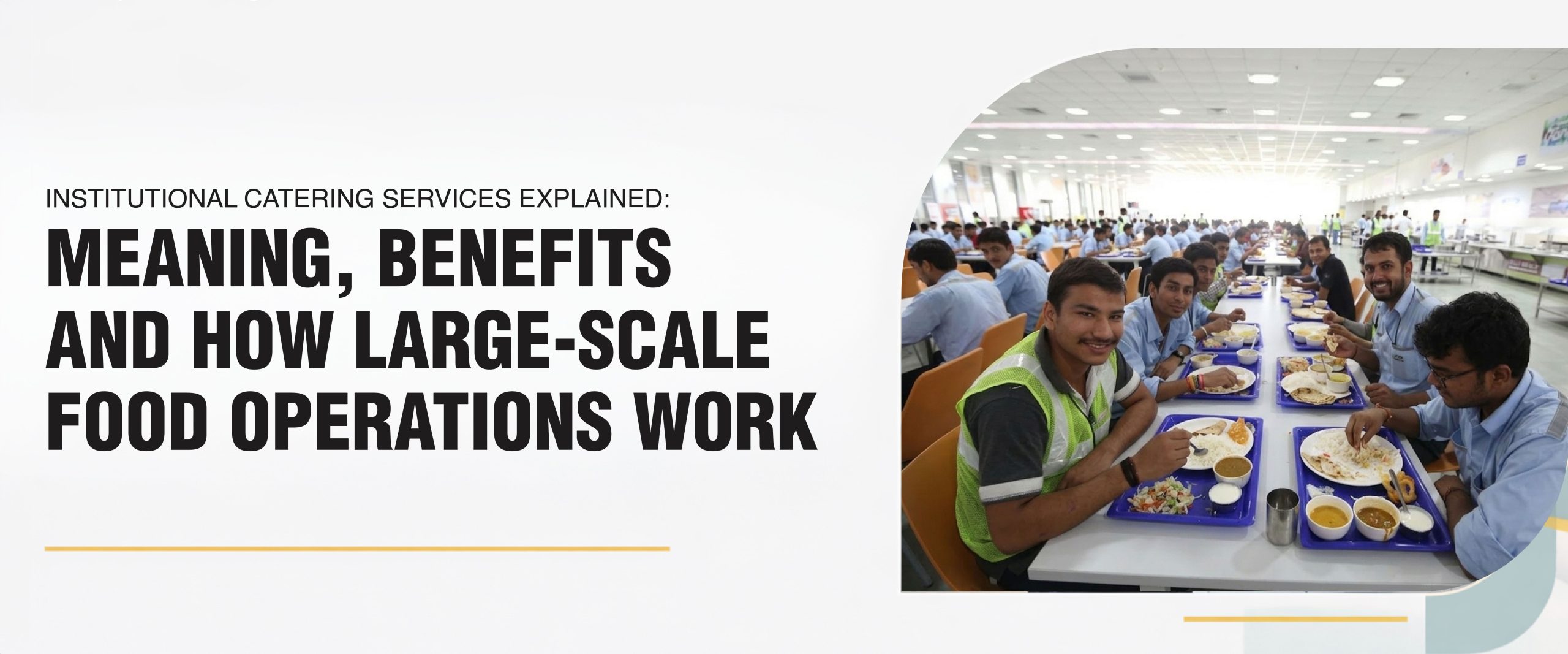
Every day across India, thousands of employees, students, patients and factory workers depend on one simple thing, safe, nutritious meals served on time. But when you’re feeding 500, 5,000, or even 50,000 people daily, regular catering just doesn’t work. That’s where Institutional Catering comes in.
From corporate campuses in Gurugram to manufacturing plants in Pune and hospitals in Chennai, large organisations rely on structured, large-scale food operations that prioritise hygiene, consistency and efficiency. And as workplaces focus more on employee wellbeing and compliance, Institutional Catering is no longer a backend service, it’s becoming a strategic business decision.
So, what exactly is Institutional Catering and how does it work at scale? Let’s break it down.
Understanding Institutional Catering
In large organisations, food services are no longer a support function, they’re part of employee experience, compliance and operational efficiency. Institutional Catering sits at this intersection, combining large-scale kitchen management, supply chain discipline and food safety governance to deliver reliable meals across corporate campuses, factories, hospitals and educational institutions.
Where Institutional Catering Plays a Critical Role
Industrial or institutional catering is everywhere around us; you just don’t always notice it. Any organisation that needs to serve large, consistent meals daily typically relies on structured catering operations. Common examples include:
- GCCs: Diverse food options for multinational teams, extended cafeteria hours for global shifts, and scalable dining solutions that support fast-growing tech and operations hubs
- Corporate Offices & Business Parks: Daily employee meals, pantry services, night-shift food
- Manufacturing Plants & Industrial Sites: Nutritious meals for shift workers and labour teams
- Hospitals & Healthcare Facilities: Patient diets, staff meals, therapeutic nutrition plans
- Schools, Colleges & Universities: Student mess facilities, hostels, campus cafeterias
- Remote Sites & Infrastructure Projects: Mining sites, oil & gas locations, defence establishments
Wherever food needs to be safe, timely and scalable, Institutional Catering becomes essential.
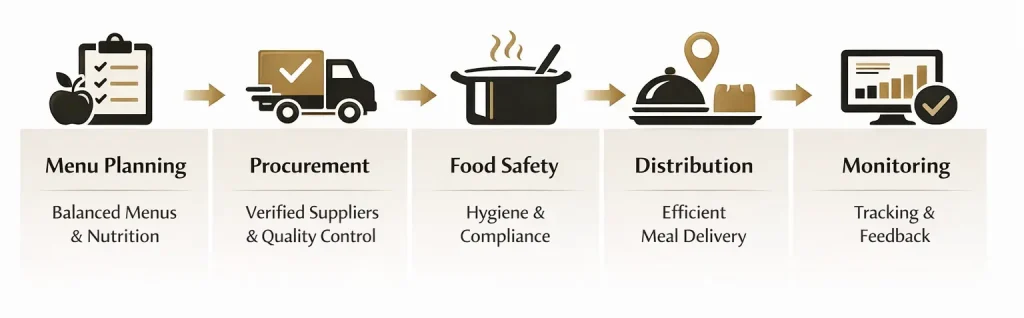
How Large-Scale Institutional Catering Works
Behind every large cafeteria or campus dining hall is a carefully planned process designed to deliver safe, consistent meals every single day. Institutional Catering at scale usually follows these key steps:
Key Benefits of Institutional Catering
When done right, Institutional Catering goes far beyond just serving meals. It becomes a strategic service that improves workplace efficiency, safety and employee wellbeing.

Why Organisations Choose Professional Food Solution Partners?
India’s contract catering market, valued at over USD 2 billion, reflects how corporate campuses, factories, and hospitals increasingly rely on organised food solutions for safe, large-scale daily meals. With stricter food safety norms and complex logistics, many organisations partner with specialised providers who bring structured sourcing, trained teams, and proven compliance systems, ensuring reliable food while businesses stay focused on their core work.
Think about your workplace for a moment, how many people depend on a safe, timely meal every day? When food services run smoothly, productivity improves, morale stays high, and trust builds quietly in the background. Institutional Catering may sit behind the scenes, but its impact is deeply human.
As expectations around hygiene, nutrition, and employee wellbeing continue to rise, organisations face a simple question: Is your food service just a necessity, or is it part of how you care for your people?