AI in Corporate Catering: How Smart Technology Is Transforming Workplace Dining
There is a moment most employees know well. It is 1:15 pm, the lunch rush is in full swing, the queue snakes past the salad counter and somewhere in the kitchen, someone is making a judgment call about whether to put out more rice. That judgment call, made dozens of times a day across thousands of corporate campuses, is where an enormous amount of food, money and time quietly disappears.
What separates a good corporate canteen experience from a great one is the intelligence running underneath the operation and that is exactly where AI is changing the game.
Table of Contents:
- AI-driven demand forecasting: getting the numbers right before service starts
- Contactless dining and digital ordering: the queue problem, finally solved
- SmartQ and the digital cafeteria transformation
- IoT in the kitchen: from reactive to predictive
- Automated meal subsidy management: the admin problem nobody talks about
- Real-time kitchen analytics: the data layer that ties it all together
- What this means for the workplace experience
AI-Driven Demand Forecasting: Getting The Numbers Right Before Service Starts
The single biggest operational challenge in food catering at scale is overproduction. A campus serving 3,000 meals a day that overshoots 8% is wasting roughly 240 meals. Multiply that across a week, a month, a year and the numbers become uncomfortable quickly.
AI-driven demand forecasting solves this by analysing patterns that no human planner can track manually: historical consumption data, day-of-week trends, weather, local events, hybrid work schedules pulled from HRMS integrations and even what was served yesterday. The system builds a prediction and the kitchen preps accordingly.
The results are clear. A 2025 study on ScienceDirect found that AI-based food waste tracking systems can reduce food waste by 23%–51% and cut the cost of wasted food per meal by up to 39%. At a large campus level, this leads to significant savings and better efficiency.
Contactless Dining And Digital Ordering: The Queue Problem, Finally Solved
The average corporate employee used to lose 15 to 20 minutes a day in the lunch queue. Across a team of 500, that adds up to roughly 125 hours of time lost every day just waiting for canteen food. Contactless corporate dining solutions have largely put an end to that.
Here is what a modern digital cafeteria setup typically looks like:
- Pre-ordering via an app or web portal: Employees can browse the menu, place orders and choose convenient pickup slots before leaving their desks
- QR code ordering at the counter: Enables quick, on-the-spot ordering for walk-ins without waiting in line
- Digital meal tokens and wallet payments: Eliminates cash handling and removes the need for manual reconciliation
- Real-time display screens in the kitchen: Allows prep teams to view and act on incoming orders instantly
One major tech park in Bengaluru recorded a 21% increase in healthier meal choices within six months of moving to a smart ordering system, largely because employees had more time to browse options and make considered decisions rather than grabbing whatever was closest in the queue.
The Integrated Smart Cafeteria Stack
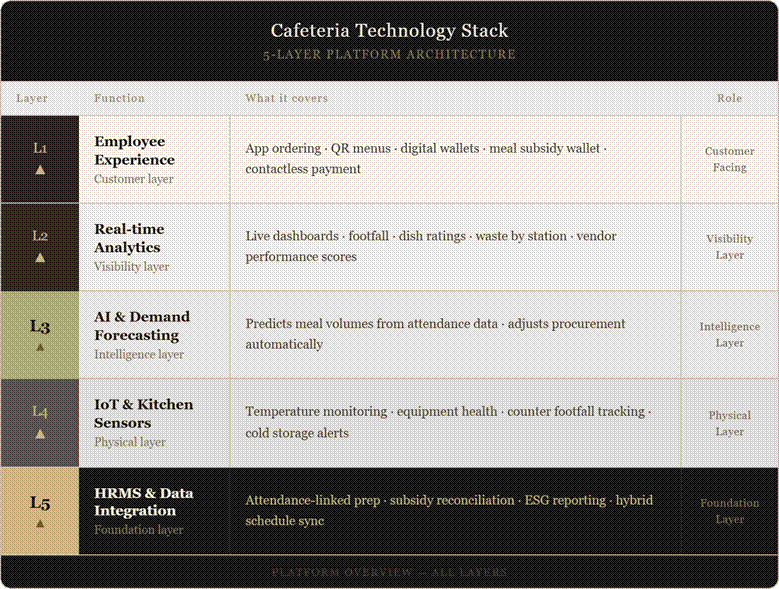
SmartQ is one of the most visible examples of what a tech-first food service operation looks like in practice. The platform brings together digital ordering, queue management, meal subsidy administration, vendor coordination and feedback collection into a single interface. This level of operational visibility is difficult, if not impossible, to achieve through spreadsheets and vendor calls alone.
What truly drives the value of such platforms is the continuous feedback loop that improves the experience over time. When an employee rates a dish poorly, that insight flows directly to the menu planning team. When a particular counter consistently runs out of food at 12:45 every Tuesday, the system flags the pattern. When subsidy utilisation drops within a specific employee cohort, HR can step in to assess whether the canteen is aligned with employee preferences.
IoT In The Kitchen: From Reactive To Predictive
Beyond the ordering interface, IoT-enabled solutions are changing how food courts and corporate kitchens are physically managed. Sensors now monitor:
| What is being tracked | Why it matters |
| Refrigeration and cold storage temperatures | Early warning on spoilage risk before it becomes a food safety incident |
| Cooking equipment performance | Predictive maintenance reduces downtime during peak service |
| Footfall at counters in real time | Helps staff redeployment during rush periods |
| Wastage by dish and station | Feeds directly into procurement adjustments for the next cycle |
For a catering service food operation managing multiple counters across a large campus, this level of visibility transforms the supervisor’s job. Instead of walking the floor and making calls based on instinct, they are working from a live dashboard.
Real-Time Kitchen Analytics: The Data Layer That Ties It All Together
At enterprise scale, intuition is not enough. Real-time kitchen analytics platforms give operations teams a live view of:
- Preparation vs. demand gaps: Is the kitchen ahead of or behind demand at any given moment?
- Per-dish cost and waste tracking: Identifies which items are profitable and which are not
- NPS and satisfaction scores by meal and station: Captures direct employee feedback and links it to menu decisions
- Carbon and sustainability metrics: Increasingly important for clients with ESG reporting requirements
This is the layer where food catering stops being a service and starts becoming a managed, measurable business function. For GCC clients with quarterly ESG reporting, a demonstrable reduction in food-related carbon output has become a core deliverable that smart food service platforms are now built to support.
So, what does this mean for workplace experience?
The workplace dining conversation has evolved. Younger employees, in particular, care about more than just what is being served. They want to understand how the canteen operates, where ingredients are sourced, and whether the food reflects genuine thought and values rather than simply being the cheapest way to fill a plate.
The organisations that are winning the workplace dining brief right now are the ones that have stopped treating food service as a cost line and started treating it as infrastructure for how people feel about coming to work.
At its best, AI doesn’t just optimise corporate dining, it quietly shapes experiences people look forward to, every single day.