How Modern Corporations Are Redefining Workplace Food Programs
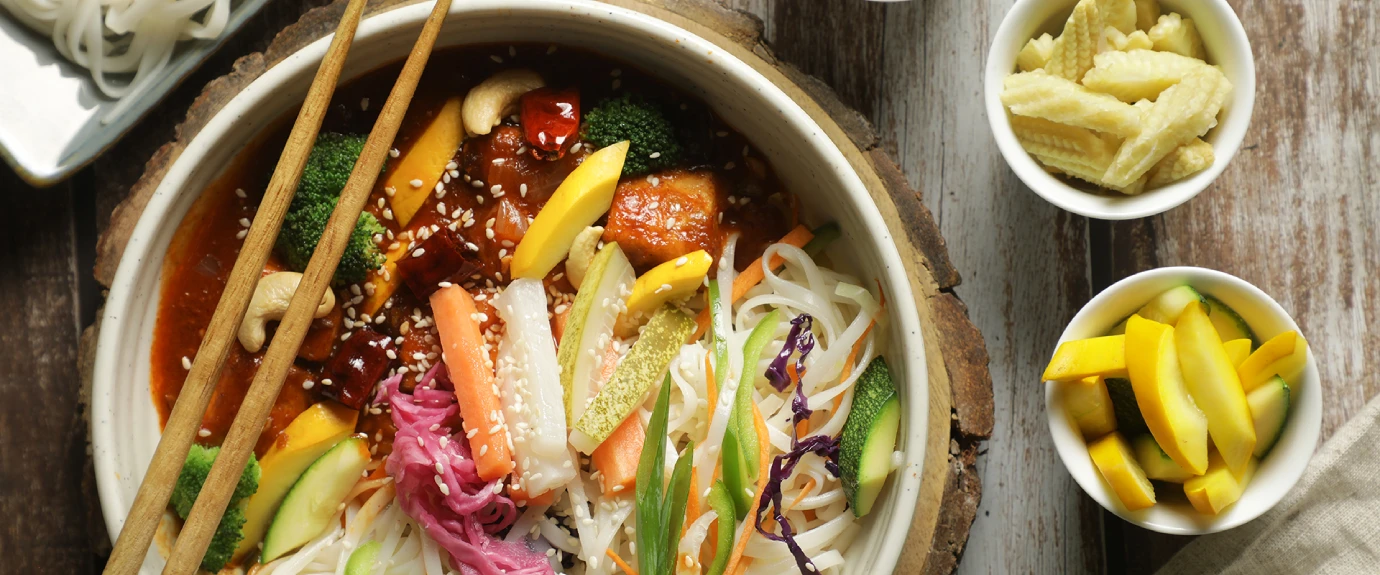
Not so long ago, corporate food services in India meant a subsidised thali, a canteen smelling of yesterday’s dal and a lunch queue that tested patience more than hunger. Today, walk into the cafeteria of a leading GCC or Fortune 500 office in Bengaluru, Hyderabad, or Gurugram and the scene is almost unrecognisable. Live counters, plant-based options, QR-code ordering, AI-curated menus and a dining experience that rivals a mid-range restaurant. Workplace food programs have quietly become one of the most consequential expressions of company culture. And in 2026, that shift is only accelerating.
In this article:
- The future of corporate dining is already here
- What Gen Z actually wants from workplace food
- AI-powered workplace nutrition: smarter than you think
- Sustainable corporate catering solutions in India
- How food service is improving employee experience, one meal at a time
- Bespoke food programs for GCCs: the competitive edge hiding in plain sight
- Food is no longer just fuel
The future of corporate dining is already here
The future of corporate dining has already arrived and somewhat unexpectedly, its most vivid expression is in the office parks of Bengaluru, Hyderabad and Gurugram. Companies are moving away from the idea that food catering service is an operational overhead and treating it as a strategic investment instead. Hybrid work has made the office a destination rather than a default and organisations need compelling reasons to bring people in. A well-run food program is one of the most tangible ones.
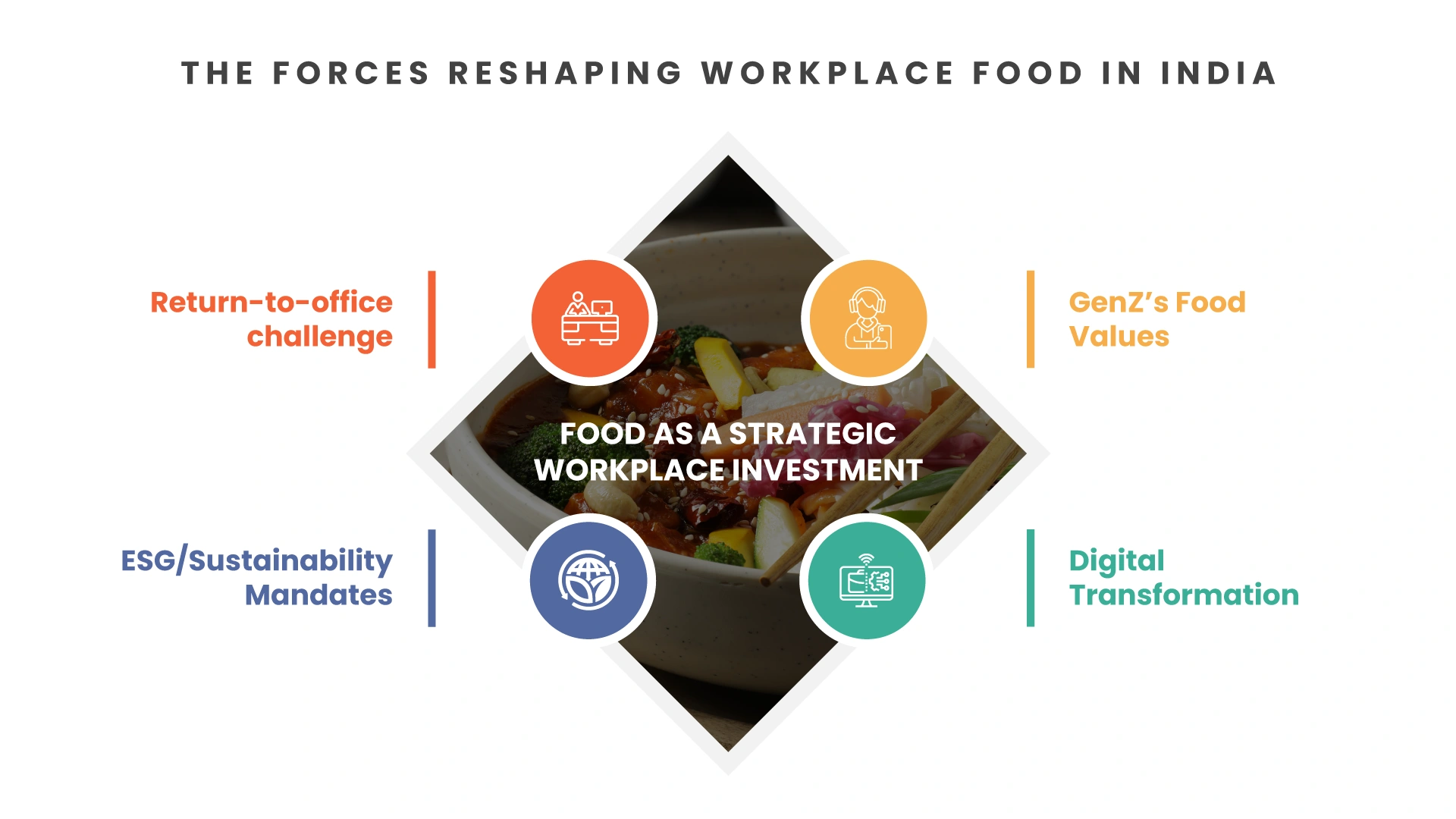
Four forces are converging to reshape corporate dining: the pressure to make the office worth showing up to, a generation of employees with genuine values around what they eat, intensifying ESG mandates that have reached the cafeteria, and digital infrastructure that can finally deliver personalisation at scale.
What Gen Z actually wants from workplace food
Workplace food programs for Gen Z are a different brief altogether. This generation grew up with Swiggy and Zomato, with global food content on Instagram and with a genuine interest in what goes into their meals. Canteen food that rotates between three curries and a dal is not going to excite a 24-year-old software engineer who orders Mediterranean grain bowls to their doorstep on a whim. The benchmark for food service in India has shifted and the office kitchen is being held to the same standard as everything else.
For GCCs and large corporates competing for the same talent pool, the cafeteria has become a differentiator. Menus with plant-based options, seasonal ingredients and globally inspired dishes are no longer a bonus. They are an expectation. Younger employees also respond well to formats that give them some control, build-your-own counters, live stations, customisable meal formats, because the cafeteria stops feeling like a canteen and starts feeling like somewhere they chose to be.
AI-powered workplace nutrition: smarter than you think
A tech park in Bengaluru recorded a 21% increase in healthier meal choices within six months of adopting AI-driven food suggestions. That is the kind of number that ends the debate about whether cafeteria design actually influences health outcomes.
Sustainable corporate catering solutions in India
Sustainability has graduated from a CSR talking point to a genuine operational priority for food companies in India. Across food catering services in India, providers are now being asked to demonstrate measurable environmental outcomes not just intent. Sustainable corporate catering solutions now span local sourcing, waste reduction, compostable packaging, plant-forward menus and zero-paper operations..
For large corporate campuses in India, the scale of opportunity is significant. A single campus serving 5,000 meals a day generates substantial food waste if operations are not tightly managed. Digital cafeteria platforms that integrate with procurement and attendance systems help organisations order the right quantities, track ingredient consumption in real time and adjust menus dynamically to reduce surplus. When rice usage trends drop midweek, the system adjusts procurement for the next cycle automatically, preventing overstock and spoilage.
There is also a growing appetite, no pun intended, for menus that reflect sustainability values in their ingredients. Millets, fermented foods like kombucha and raita, sprouted grains and seasonal produce are appearing more frequently in corporate cafeteria menus in India, driven both by health trends and a genuine desire to reduce the carbon footprint of daily meals. This shift is further accelerated by a generational change in expectations: younger employees care not just about what is on their plate, but where it came from, how it was grown and the hands it passed through before reaching them.
How food service is improving employee experience, one meal at a time
A recent ezCater survey found that 43% of companies in the US now offer recurring meal programs, up 17% from 2024. Over 40% of companies have prioritised health-centric menu transformations, with many Indian firms introducing protein-rich meals, diabetic-friendly and low-GI options and homestyle food with less oil and spice. The food services company that gets this right contributes to something larger than lunch. It shapes how employees feel about coming into the office, how they connect over a shared meal and how they read their organisation’s commitment to their wellbeing.
Bespoke food programs for GCCs: the competitive edge hiding in plain sight
India’s GCCs are growing in number and in ambition. These are centres of global product development and decision-making, competing fiercely for the same qualified talent and the cafeteria is part of the pitch whether organisations acknowledge it or not.
Bespoke food programs for GCCs draw on on-site research, regional and demographic insights and real-time consumer feedback to deliver something that feels genuinely tailored rather than templated. A GCC in Hyderabad with seasonal menus, international cuisine options and a cafeteria that actually reflects its workforce sends a clear signal: this is a workplace that takes its people seriously. For food companies in India working in this space, the brief has quietly expanded from logistics to culture-building and culinary identity.
Food is no longer just fuel
There is something quietly revealing about the fact that the humble office canteen has become a proxy for how seriously a company takes its people. When food service evolves from a cost centre into a culture investment, its impact ripples across engagement, wellbeing, sustainability and even talent acquisition. Companies that understand this are not just investing in better canteens. They are building better workplaces.
That shift didn’t happen because companies suddenly discovered generosity. It happened because the office needed a reason to exist again and food turned out to be one of the most honest answers.
The future of corporate dining in India is being shaped right now, one thoughtful meal at a time.
Is your workplace food program keeping pace?