The Rise of Hospitality-Led Workplace Experience
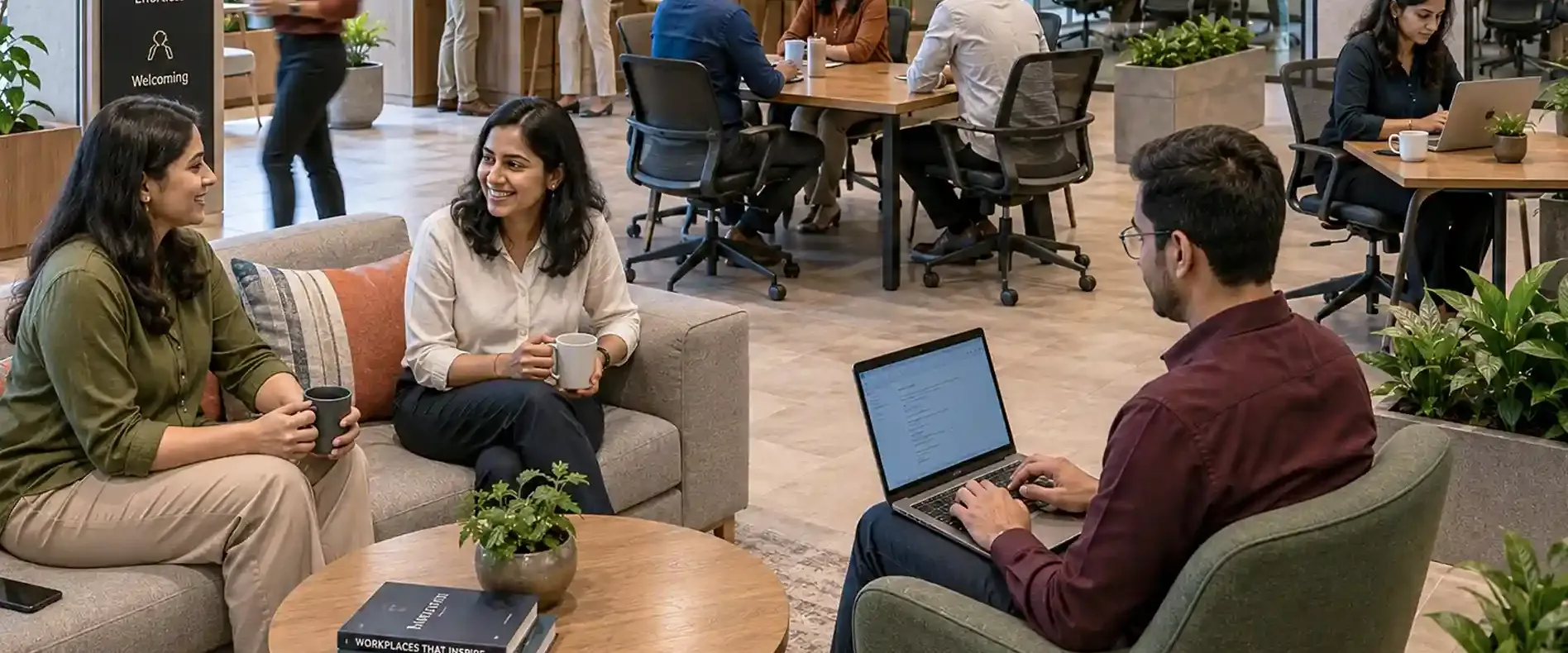
You leave home, navigate the commute, find your way into the office, grab a coffee, settle into your workspace, move between meetings, figure out lunch, look for somewhere quiet to focus, take a much-needed break and eventually make your way home.
None of these moments are particularly extraordinary. But together, they make up the experience of work.
And employees are paying more attention to that experience than ever.
In India, only 23% of employees were engaged at work in 2025, while 59% were classified as “not engaged” physically present, but psychologically detached. At the same time, 33% of Gen Zs and 29% of millennials experience stress or anxiety all or most of the time, with work being a significant contributor for many.
This tells us something important: the workplace cannot simply be a place where work happens. It has to help people work, feel and function better.
And perhaps the easiest way to rethink this is to borrow a lesson from somewhere employees already understand intuitively: hospitality.
Great hospitality is rarely about one grand gesture. It is about the little things being considered, the welcome, the comfort, the food, the ambience, the ease and the feeling that someone has thought about what you might need.
Why should the workplace be any different?
This is where workplace hospitality comes in and it can be understood through five dimensions: Nourish, Enable, Connect, Personalise and Sustain.
The Workplace Is Becoming More Than a Place to Work
For years, the workplace was designed primarily around function: enough desks, meeting rooms, facilities and infrastructure to get the job done.
But today, the bar is higher.
Employees want workplaces that make it easier to focus, connect, recharge and feel supported. In fact, only 14% of workers globally say they want a traditional corporate workplace experience. Instead, employees are increasingly drawn to environments that feel more natural, creative, residential and experiential.
This is where the idea of workplace hospitality becomes powerful.
Hospitality is not about turning an office into a hotel. It is about adopting the mindset of a great host: anticipate needs, remove friction, create comfort and make people feel considered.
And that changes the question for workplace leaders.
It is no longer simply:
“How do we manage this workplace?”
It becomes:
“How can we make every moment at work better for people?”
That shift brings us to five dimensions of workplace hospitality: Enable, sNourish, Connect, Personalise and Sustain.
Enable: Making the Workplace Work Smarter
The best workplace services are the ones employees barely have to think about. A meeting room that is ready before they arrive. A clean space when they need it. Comfortable air, working facilities and everyday services that simply work.
Technology is making this possible by helping workplaces sense, predict and respond in real time. From AI-powered facility management and robotic cleaning to predictive maintenance, smart washrooms and intelligent indoor air-quality monitoring, operations are becoming increasingly responsive.
28% of facility management teams have moved from evaluating AI to actively implementing it, signalling a shift towards more intelligent, data-led workplace operations.
The goal isn’t to make the workplace feel more technological. It is to remove friction so seamlessly that employees simply experience a workplace that works.
Nourish: Food Is More Than Fuel
The workplace café is no longer just a place to grab lunch. It can be a space to pause, recharge, connect and reset.
86% of employees say they feel happier when food and drink are available at work, showing how seemingly small provisions can influence the everyday workplace experience. And 93% agree that the food and drinks they consume directly impact how they feel.
So, the opportunity goes beyond serving a good meal. It is about workplace food programs that nourish both people and their workday.
Connect: Making Space for People
Work is not meant to happen in isolation. Yet 49% of employees say they feel lonely or isolated at work, while 27% still eat at their desk or workstation. The message is clear: simply bringing people into the office does not automatically create connection.
The spaces around them matter.
Workplace cafés are becoming more than places to eat; they are becoming natural social hubs for conversations and collaboration. Flexible breakout areas can encourage the spontaneous interactions that rarely happen in a formal meeting room, while quiet zones and wellness spaces give people permission to step away, recharge and return with a clearer mind.
And employees are looking for spaces that make those moments enjoyable, too. 43% say games and game areas are the workplace social facilities they would most like to have, making play an increasingly important part of the workplace experience.
The result is a workplace that can flex with the rhythm of the day, a place to focus, collaborate, unwind, play and connect.
Because connection at work isn’t created by putting people in the same building. It’s created by giving them reasons to come together.
Personalise: The Workplace That Knows You
Employees are increasingly looking for a workplace that works with them, not just around them. In fact, 67% of business and HR leaders say customising the design and experience of work around individual worker needs is important, while 55% see technology-enabled hyper-personalisation as critically or very important.
And that personalisation can show up in surprisingly everyday ways, from a welcome screen that recognises you and a workspace that reflects your preferences, to dining recommendations, smart services and discreet wellbeing insights.
Imagine if your workplace knew you:
- Recognised you: Personalised welcomes, preferred workspaces, reserved parking and smart check-ins.
- Supported you: On-site laundry, concierge services, parcel lockers and smart lockers.
- Guided you: AI workplace assistants, indoor navigation, meeting-room recommendations and personalised apps.
- Knew your Preferences: Dining recommendations, dietary preferences, smart vending and favourite orders.
- Cared for you: AI-powered smart health urinals offering private hydration and wellness insights, personalised reports, circadian lighting and adaptive comfort.
The future of personalisation is simple: the workplace should feel less like it was designed for everyone, and more like it was designed with you in mind.
Sustain: Making Every Workplace Choice Count
Sustainability is no longer something employees notice only in a company’s annual report. It is becoming part of how they judge the workplace itself.
64% of Indian Gen Zs research a company’s environmental impact before accepting a job, while 92% of employees believe employers have a responsibility to proactively promote sustainability, from tackling climate change and reducing waste to responsible sourcing.
That expectation is changing what sustainability looks like at work. It can show up in how buildings use energy, how food is sourced, how waste is managed, how water is conserved and how employees move to and from work.
The opportunity is to make sustainability visible, every day and effortless, so that doing the right thing for the planet becomes part of doing a better job for people.Because every small workplace decision can contribute to a healthier planet and a better employee experience.
When workplaces nourish, enable, connect, personalise and sustain, every workday becomes a little more thoughtful, effortless and human.

