The Rise of India’s Snacking Society: What It Means for the Modern Workplace

India has always loved its snacks. From chai paired with biscuits or namkeen to an evening plate of chaat or a handful of roasted peanuts, snacking has long been woven into our everyday routines. But today’s snacking culture looks very different. It’s no longer confined to tea time or an evening indulgence; it’s happening throughout the day, driven by busier schedules, changing lifestyles and evolving food preferences.
A handful of roasted nuts before a meeting, a protein bar between calls or an impromptu trip to the vending machine because, let’s face it, the 4 PM hunger is real. Snacking has become an integral part of the modern workday. In fact, 42% of employees eat at least two snacks during the workday, highlighting a clear shift in how people fuel themselves at work.
For organisations, this isn’t just a change in eating habits; it’s a shift in employee expectations. As workplaces evolve, so must the food experiences they offer. From healthier grab-and-go options to smart vending, micro markets and well-stocked pantries, organisations have an opportunity to support employee wellbeing, convenience and productivity, one snack at a time.
It’s More Than a Break, It’s Snack O’Clock
Sometimes, all it takes is a quick snack to step away from the desk. In a workday filled with back-to-back meetings, endless emails and looming deadlines, these small breaks offer employees a chance to recharge, reset and return with renewed focus. What may seem like a simple snack break often becomes a much-needed mental pause.
Creating a healthy break culture can also contribute to employee wellbeing, engagement and workplace productivity.
Meet India’s Snack Generation
If there’s one generation leading India’s snacking revolution, it’s Gen Z. Forty-two per cent of Gen Z consumers snack at least three times a day, making them the most frequent snackers across age groups. For a generation that values convenience, variety and food that fits around their lifestyle, snacking has become second nature.
But Millennials (38%) and Gen X (30%) aren’t far behind. As workdays become busier and eating habits more flexible, professionals across generations are replacing rigid meal schedules with smaller, more frequent eating occasions. What began as a Gen Z habit is now shaping workplace food culture as a whole.
Cravings Have Changed. So Has the Snack Basket.
Potato chips may still top the snack chart, with 79% of consumers choosing them as their go-to snack. But the snack basket is beginning to tell a different story. Alongside familiar favourites, there’s a growing appetite for healthier alternatives that offer both taste and nutrition.
Health is steadily earning a place in the snack aisle. Choices such as roasted makhanas, nuts, protein bars, fresh fruit and yoghurt are becoming increasingly popular as consumers look for snacks that deliver both taste and nutritional value. The result is a snack culture that’s no longer driven by indulgence alone, but by balance.
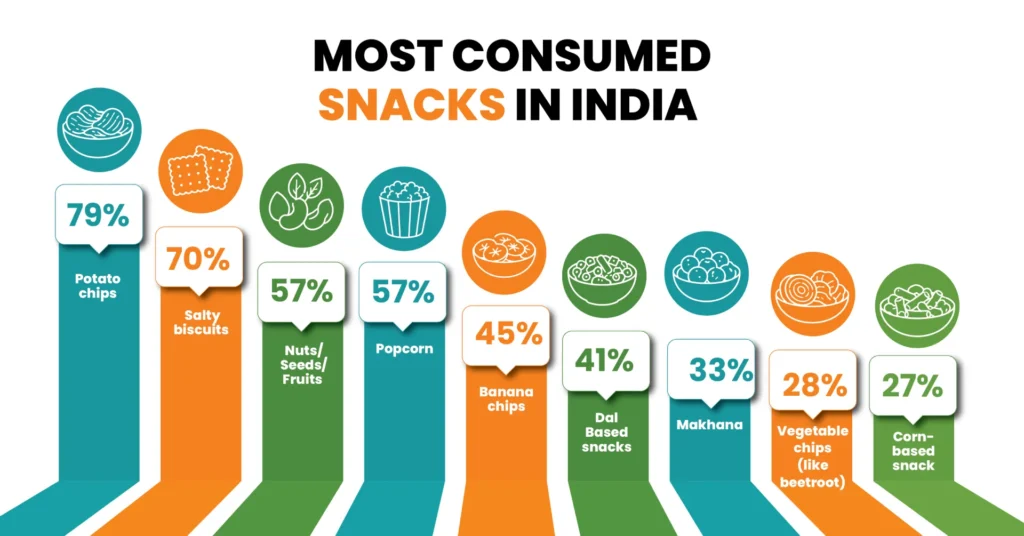
Most Consumed Snacks in India
- Potato chips: 79%
- Salty biscuits: 70%
- Nuts, seeds and fruits: 57%
- Popcorn: 57%
- Banana chips: 45%
- Dal-based snacks: 41%
- Makhana: 33%
- Vegetable chips, such as beetroot chips: 28%
- Corn-based snacks: 27%
The Rise of Nutri-licious Snacking
For years, taste has been the biggest deciding factor when choosing a snack. But growing awareness around obesity, ultra-processed foods (UPFs) and overall wellbeing is encouraging consumers to rethink what’s in their snack basket. While enjoyment remains non-negotiable, health is rapidly becoming just as important.
This shift is fuelling demand for “nutri-licious” snacks—options that strike the right balance between flavour and nutrition. For workplaces, it presents an opportunity to move beyond conventional offerings and provide snacks that employees genuinely enjoy while supporting healthier choices.
What’s on the Label Matters
Today’s consumers are looking beyond eye-catching packaging. They’re turning packs around to check ingredient lists, protein content, sugar levels and calorie information before making a purchase. As nutritional awareness grows, transparency is becoming just as important as taste.For employers, this signals a clear opportunity to stock workplace pantries, vending machines and micro markets with snacks that employees can feel good about choosing, not just because they taste good, but because they know what’s in them.
As snacking becomes part of the workday, employees expect food to be as accessible as the rest of their workplace experience. Technology-enabled food and beverage marketplaces are helping meet this need by offering convenient access to food throughout the day while keeping pace with changing consumer preferences.
With 45% of employees preferring snacks from premium brands, 38% opting for snacks made with natural ingredients and a growing preference for snacks that include nuts as key ingredients, one thing is clear: nutri-licious snacks are no longer a niche offering; they’re becoming the expectation.
Vending Solutions Have Come a Long Way
There was a time when vending machines meant a packet of chips and a can of cola. Today, they’re serving everything from wholesome snacks and fresh meals to healthier beverages and grab-and-go options, meeting employees wherever hunger strikes.
As expectations continue to evolve, these self-service formats are becoming an integral part of the employee experience, supporting convenience, wellbeing and a workplace culture that puts people first.
Vending machines are no longer just a stop for a quick snack. With 80% of employees saying they improve the workplace dining experience and 16% choosing to eat lunch from them, they’re becoming an important part of how employees eat at work.
India’s snacking culture is evolving, and so are employee expectations from the modern workplace cafeteria. As workplaces embrace healthier choices, smarter vending and flexible food experiences, they’re not just keeping pace with changing eating habits—they’re helping fuel a more engaged and productive workforce.